Polski
European Union National Outfit (textiles)
European Union National Outfit (textiles)
textiles design for EU countries
In the past it was easy to tell from where you are, who you are – Polish, German, etc. people could express it also by the outfit they were wearing. To day in Europe we all look the same….and what is more we are more and more mixed, (mixed marriage and because of work emigration , cheep flights.
The H&M company which is making a global design – for everybody means for nobody. It looks like that The Sweden is giving the designs of the outfit than it is send to Asia and close and far East. The thousands of mass workers without the name are producing the outfits for the mass of people in Europe and US, without the difference for the country and identity. There is no personal individual need and expectation in this.
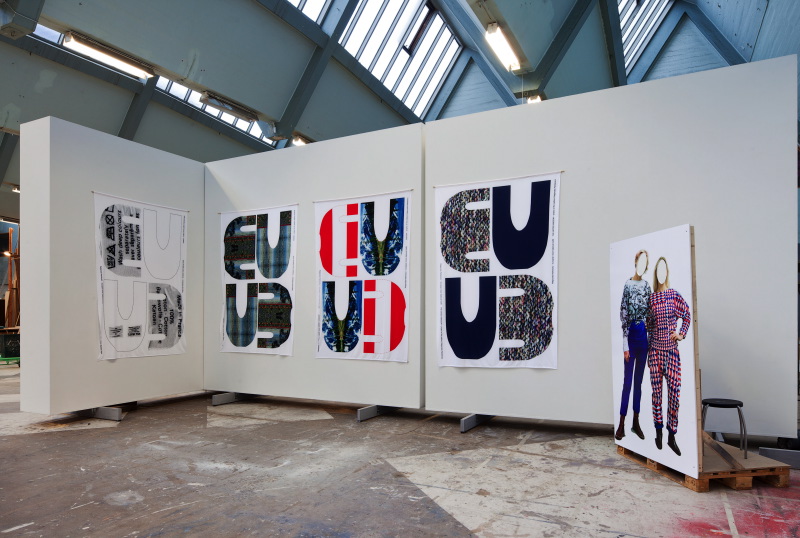
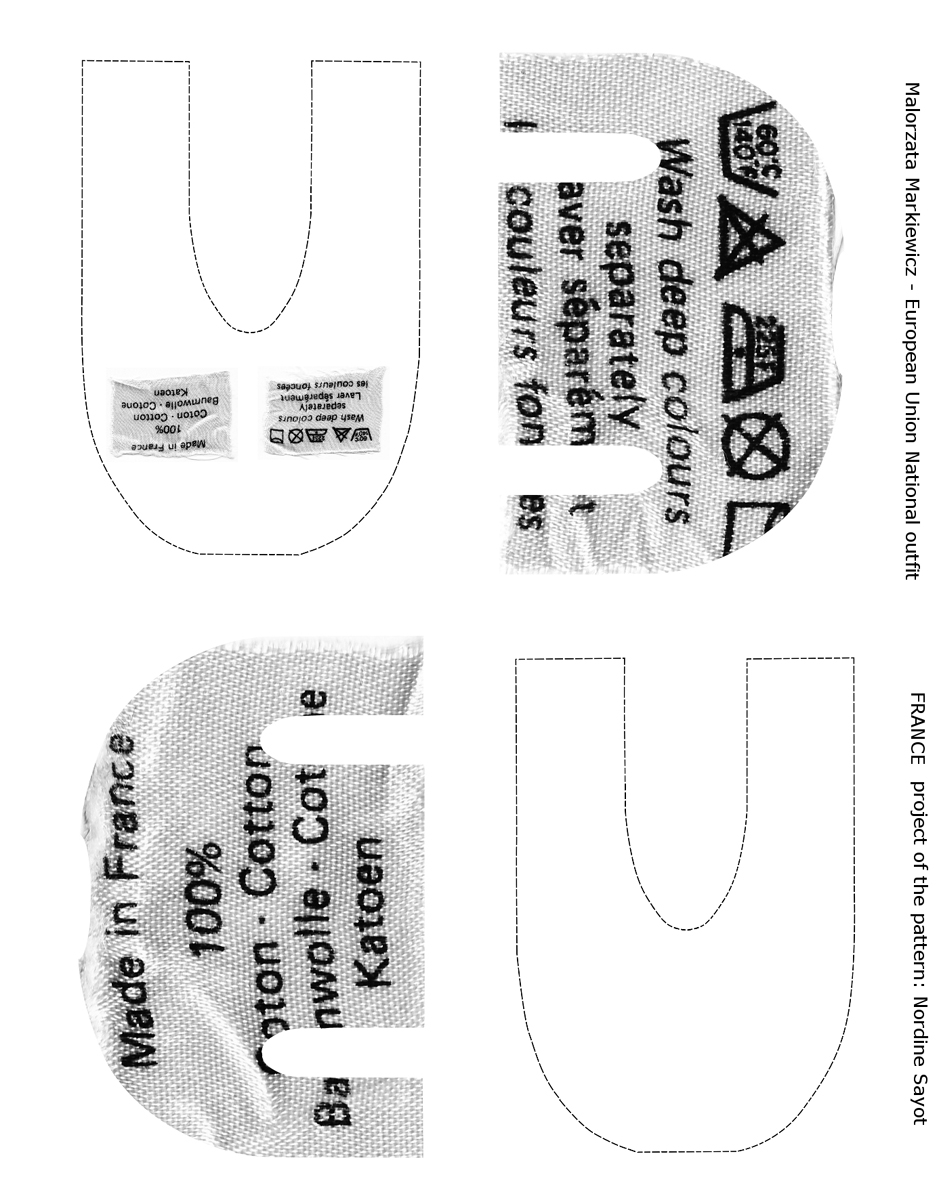
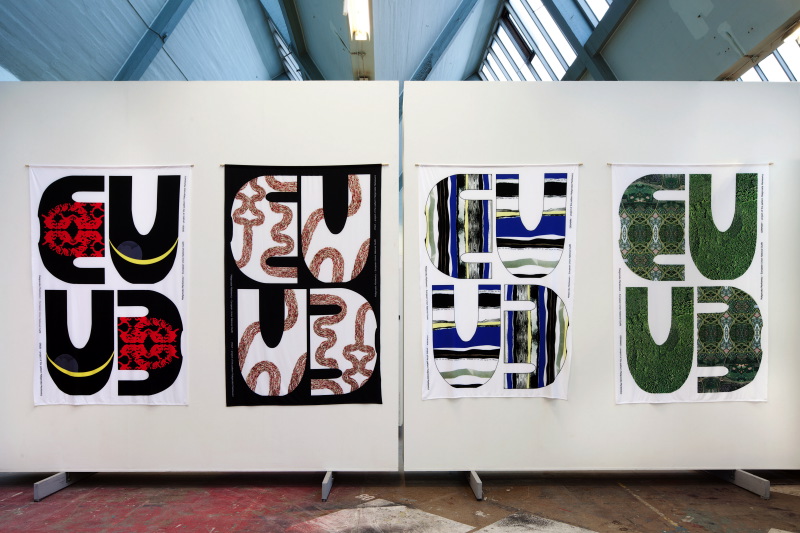
The European Union National Outft. Taking up the project, I was wondering how I could design a ‘national’ costume without producing a replica of the ubiquitous old favourites: bright-coloured skirts, corsets, garlands, decorations and ribbons. I aimed to come up with a design unlike any before, while, at the same time, one which would incorporate a number of positive features, with which Europeans might want to be associated, such as: modesty, comfort, simplicity, care for the environment, local character, respect. Rejecting big, blowy skirts, I concentrated instead on the typography of the abbreviation ‘EU’, employing the ‘E’ as a pattern for cutting the top, and the ‘U’ as the pattern for the trousers. The cut was going to be identical for all Europeans, regardless of their gender. The only differences would be in the material used and the finishing detail.
For each country, I designed a separate textile, a cloth which is my own impresion about the characteristic elements for the given country. This employing of an element (the textile) to individualise a particular country was intended as an expression of the right, stated in the Constitution of the European Union, of each country to have its separate cultural identity respected.
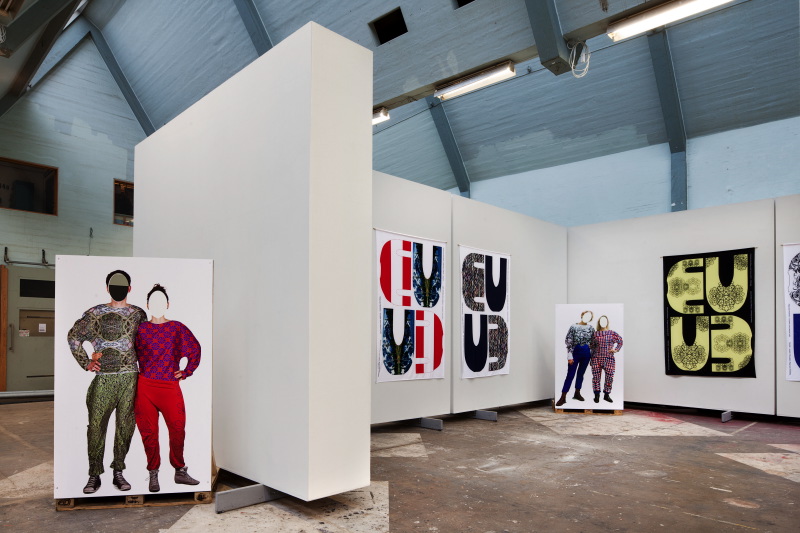
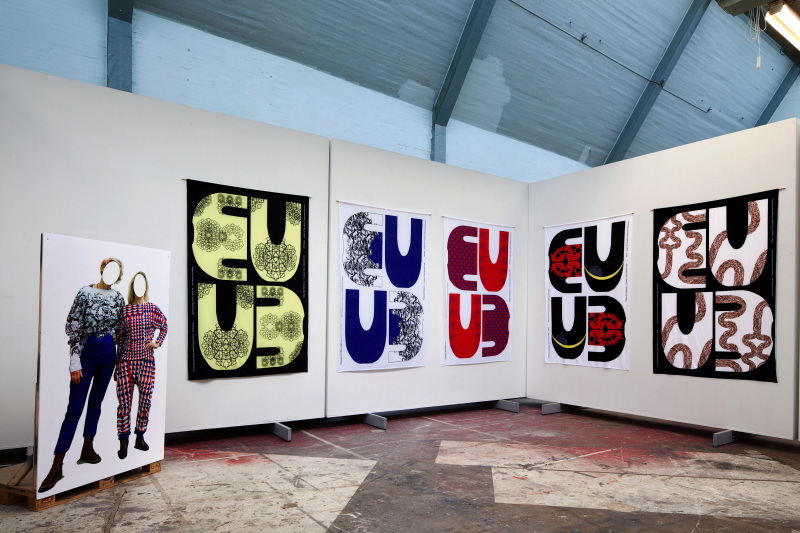
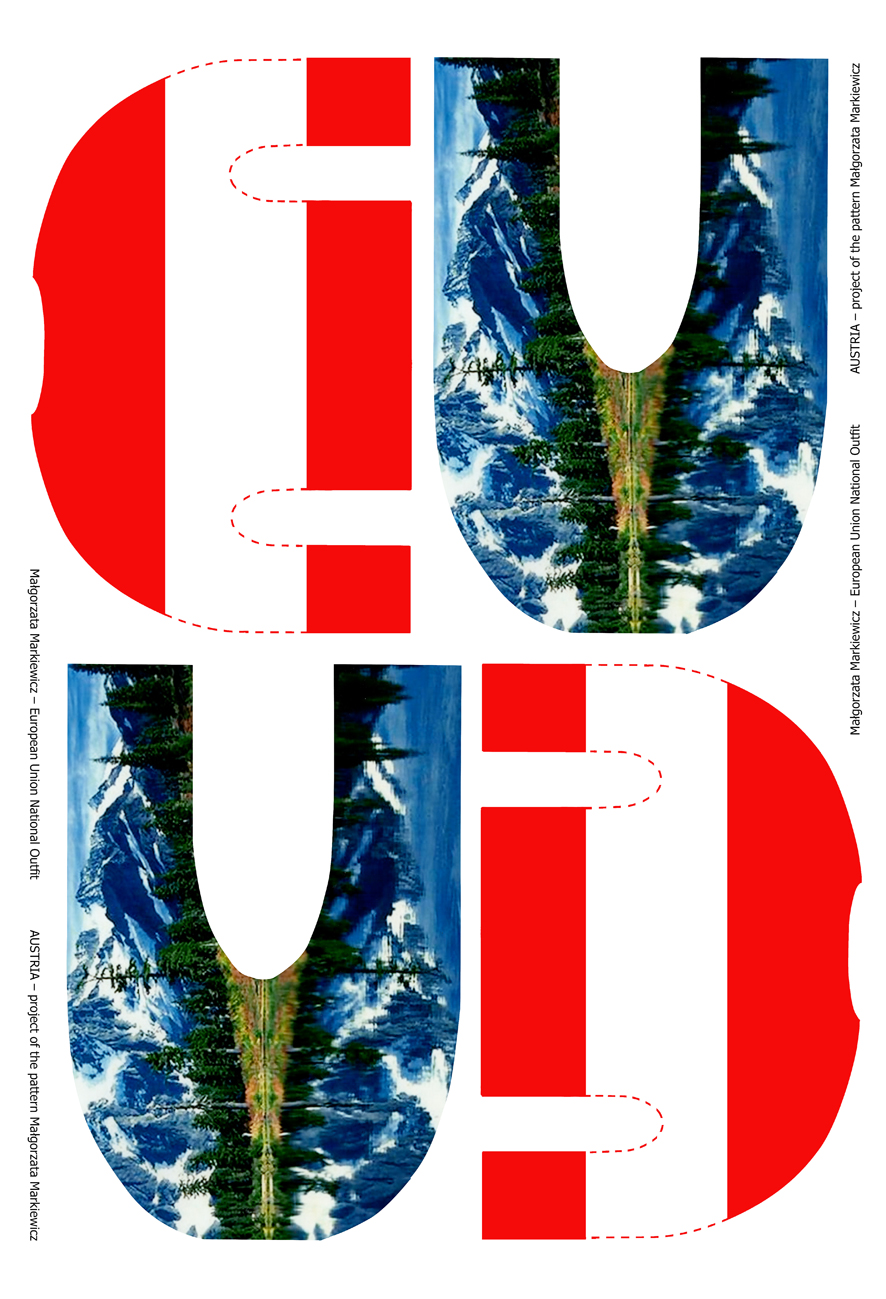
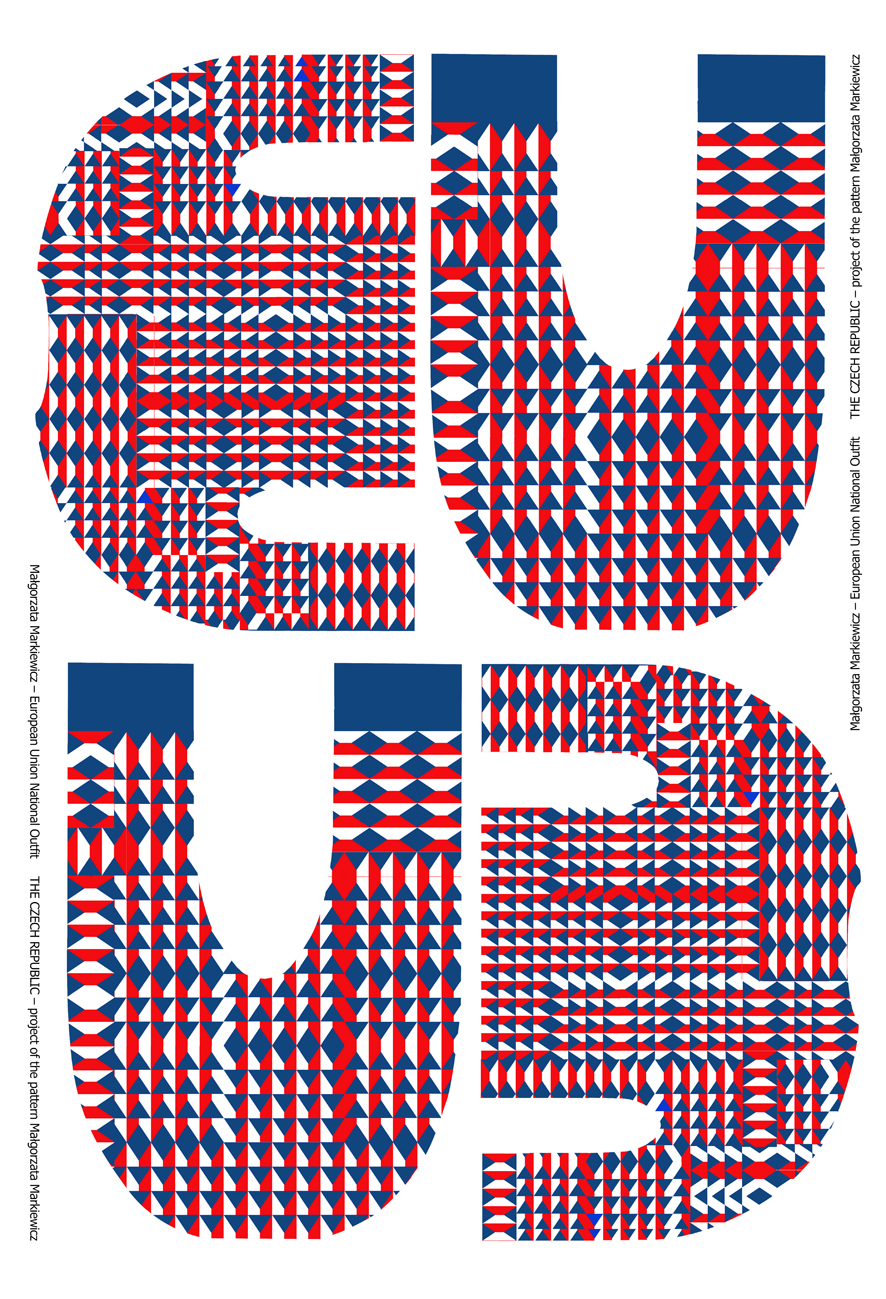
AUSTRIA
The top: the red-and-white stripes are a reference to the Austrian national flag.
The trousers: a ‘postcard-pretty’ motif of a mountainous landscape. Above all, Austria has associations with the Alps, winter holidays and recreation.
SPAIN
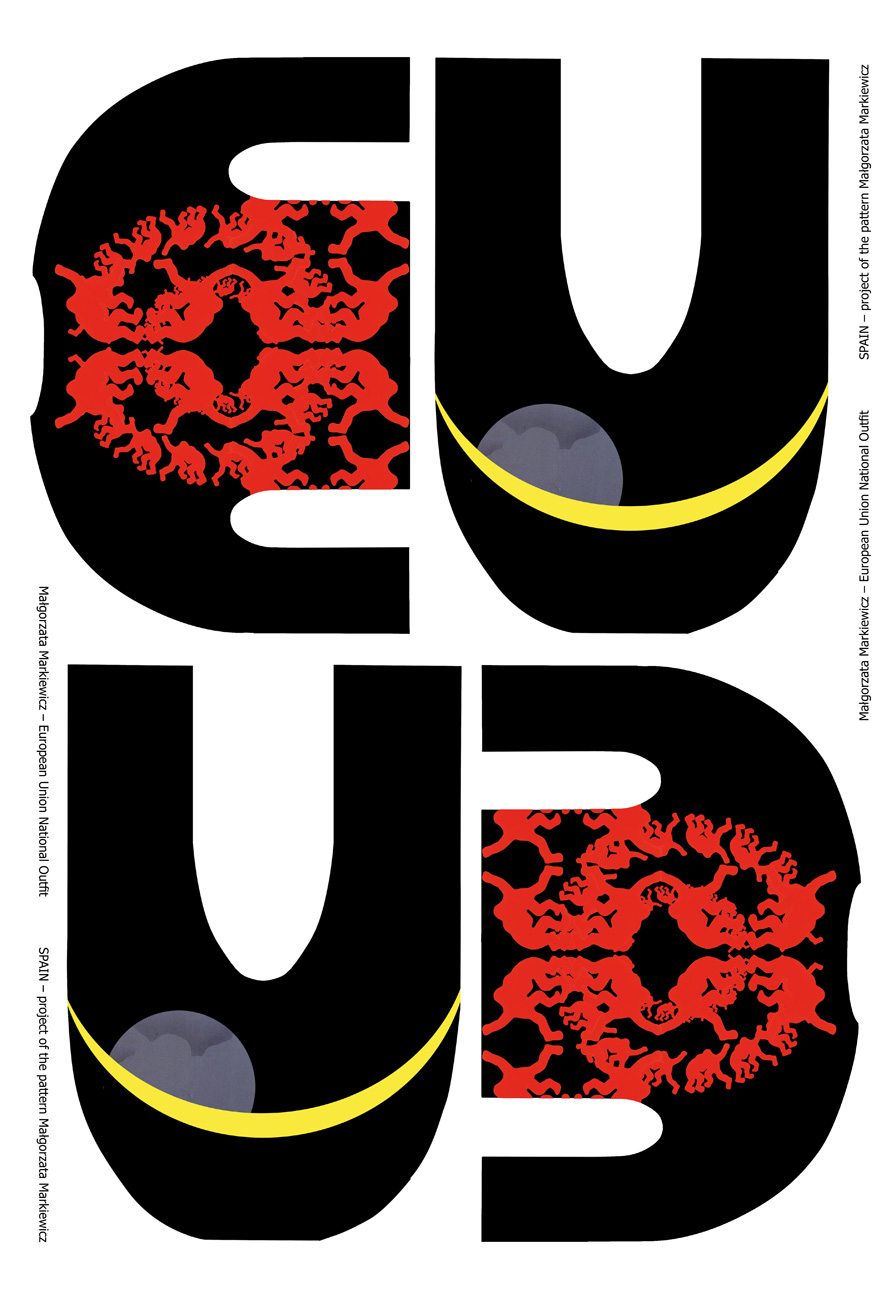
The top: the design is based on sketchily drawn silhouettes of people playing football or fighting. The motif is inspired by the temperament of the inhabitants of Spain, who ‘clash’ daily.
The trousers: the motif of the moon and horizon refers to the pioneering role of the Spanish in long-distance sea voyaging.
PORTUGAL
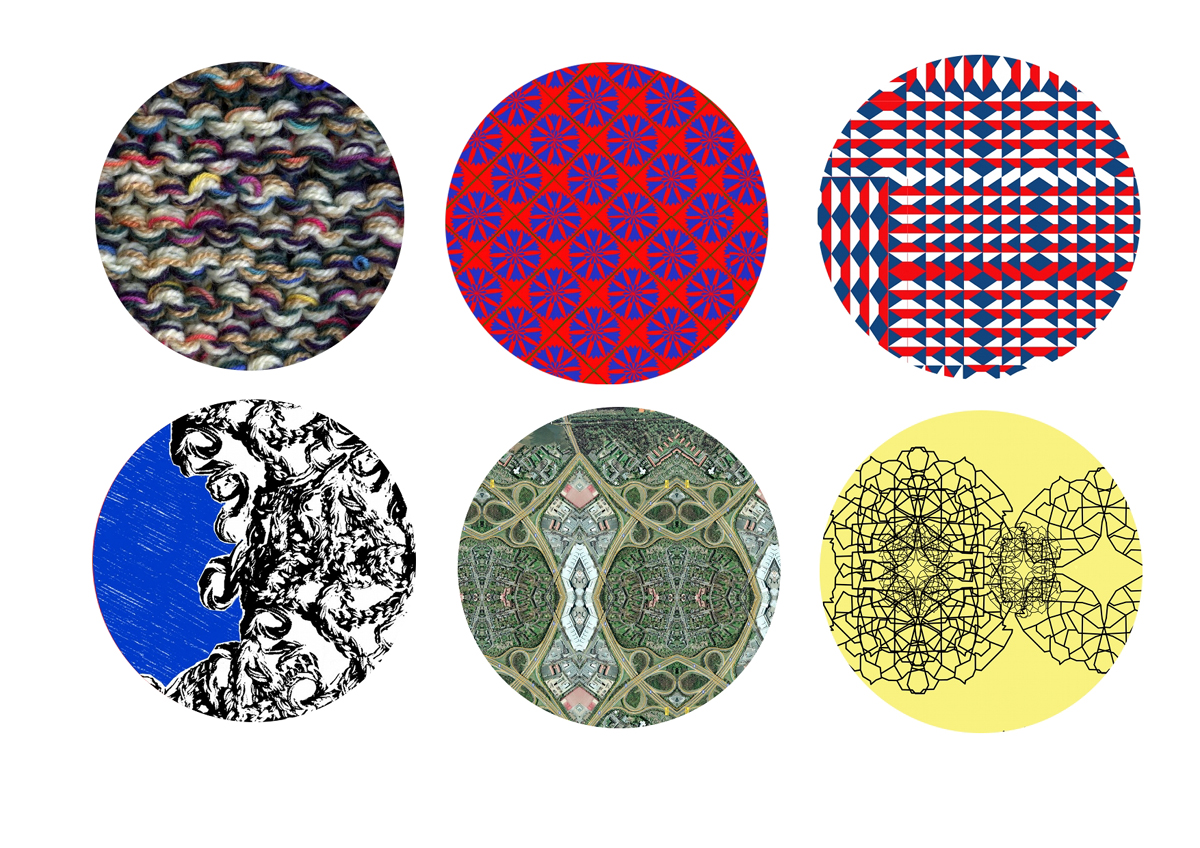
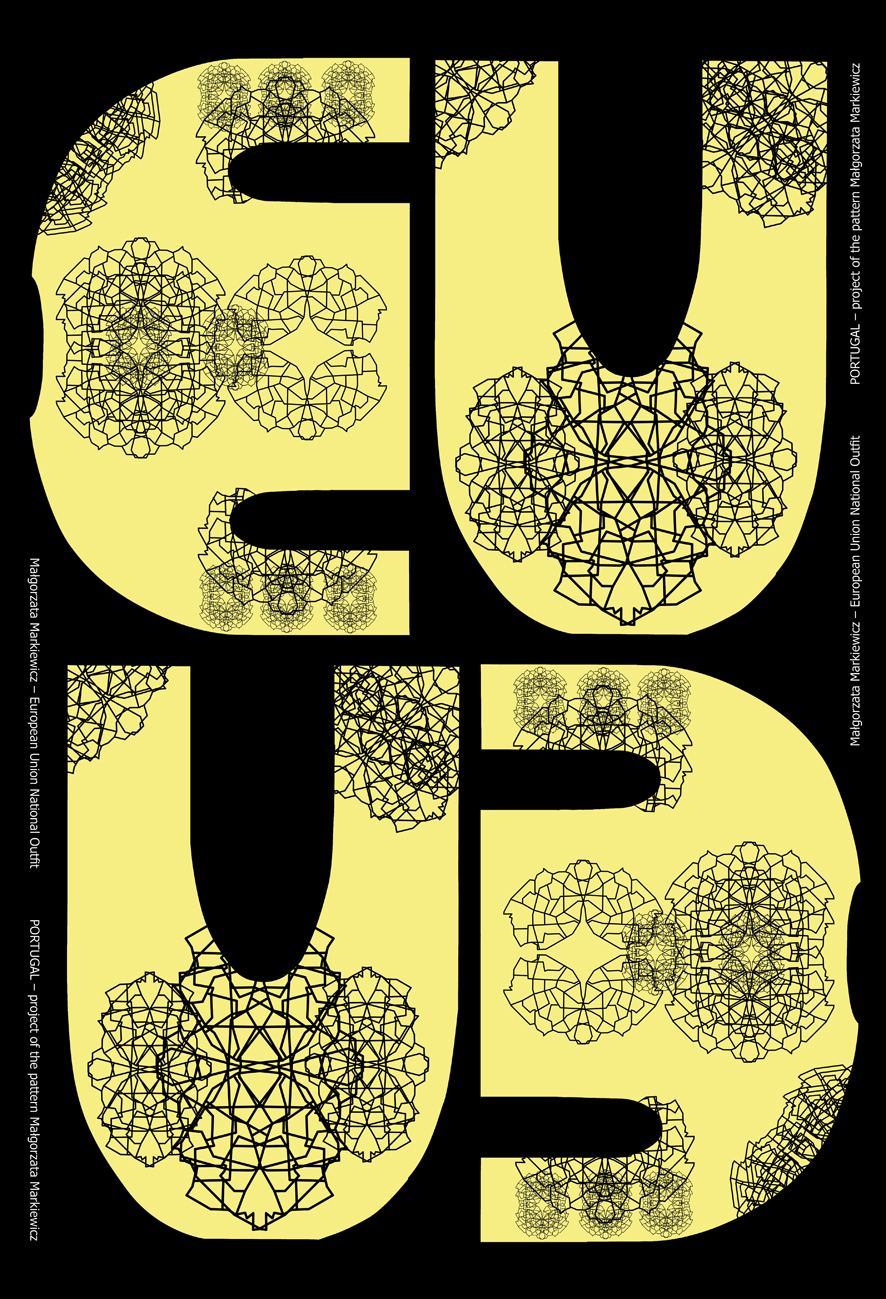
The top and trousers: the dominant motif on the cloth is a plan of Lisbon, copied over and over. The combination of a number of layers creates a decoration which alludes to Moorish culture – a significant element in the Portuguese heritage.
GERMANY
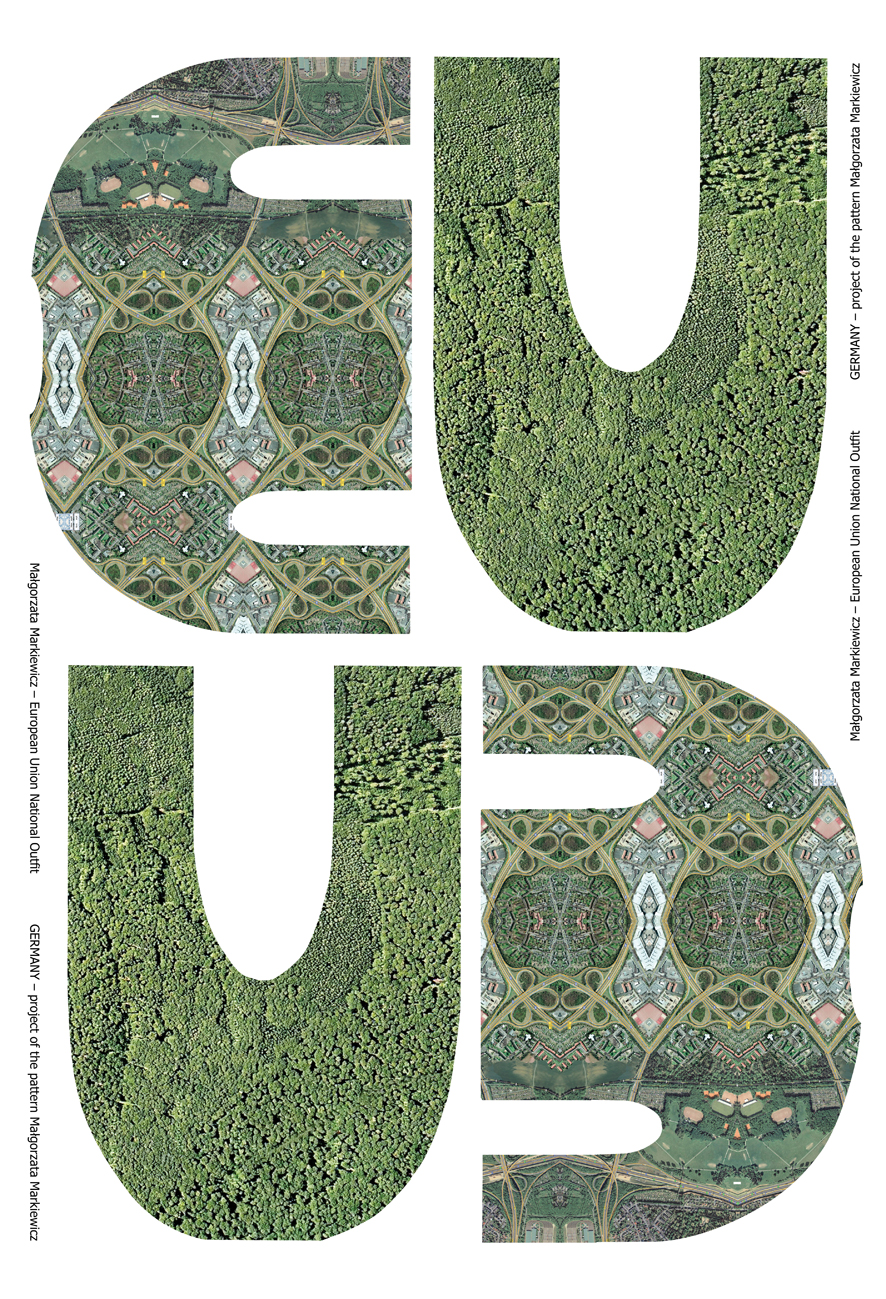
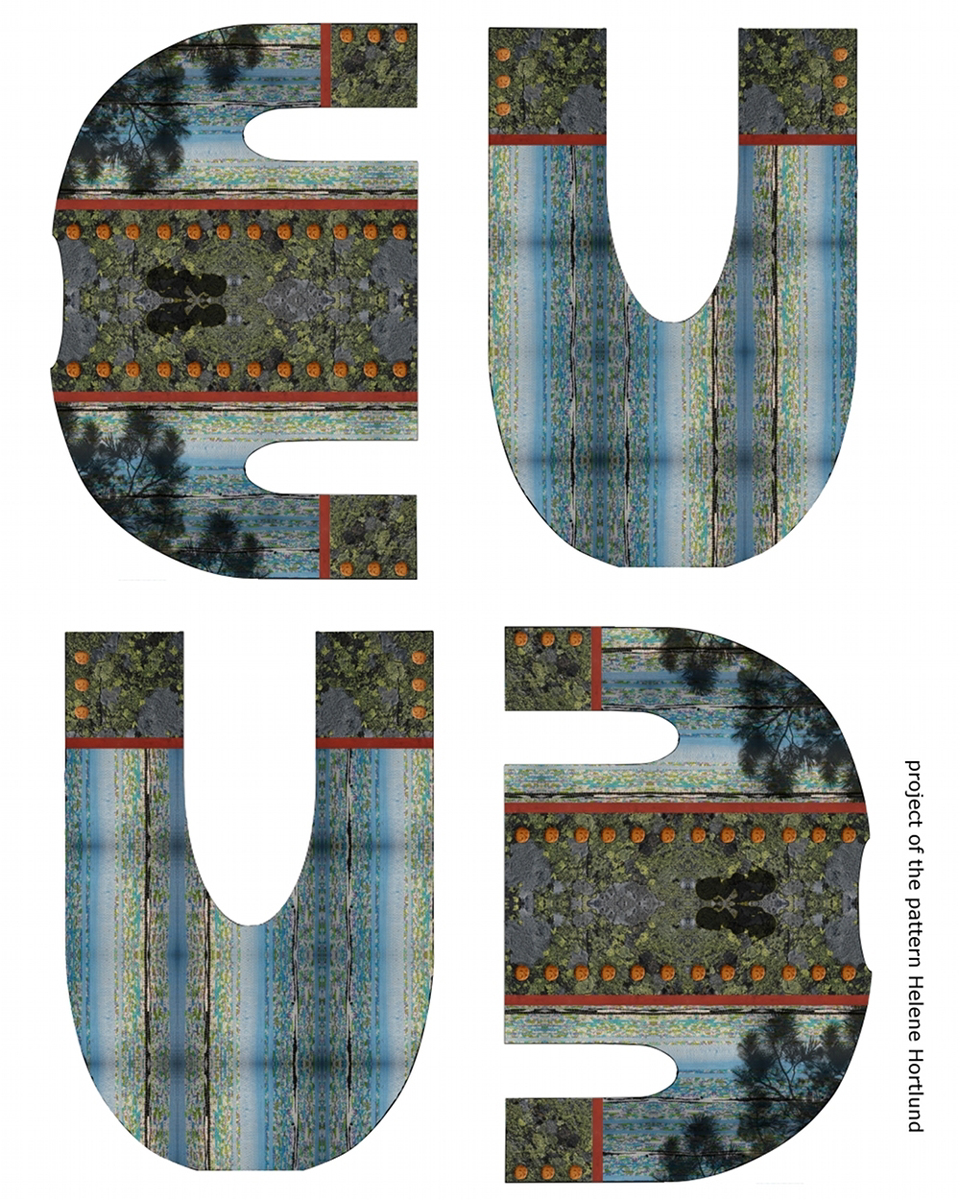
The top: design based on the layout of Germany’s trademark Autobahns, photographed from a bird’s eye view. The juxtaposed elements are reminiscent of windows in gothic buildings.
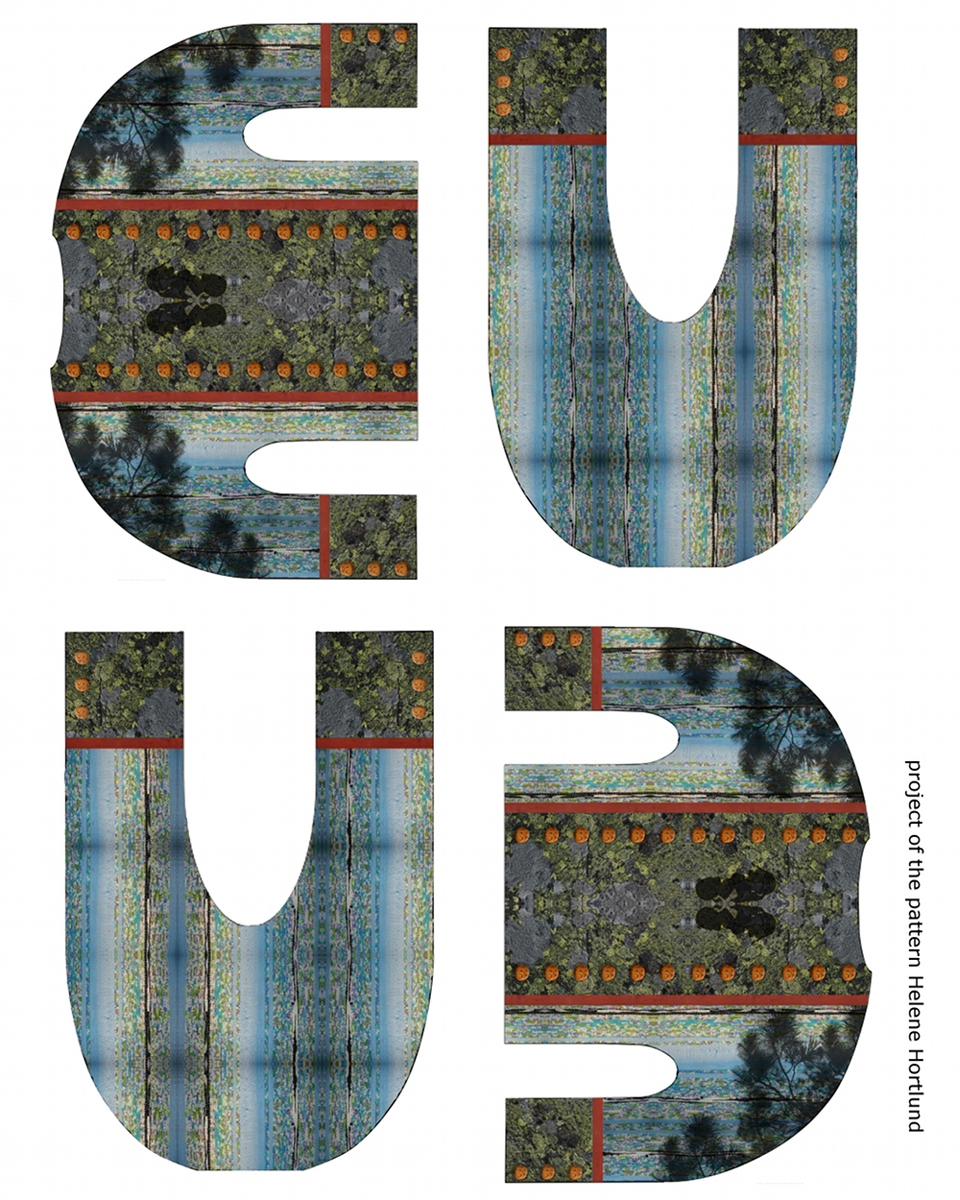
The trousers: design derived from a photograph of German forests.
FINLAND
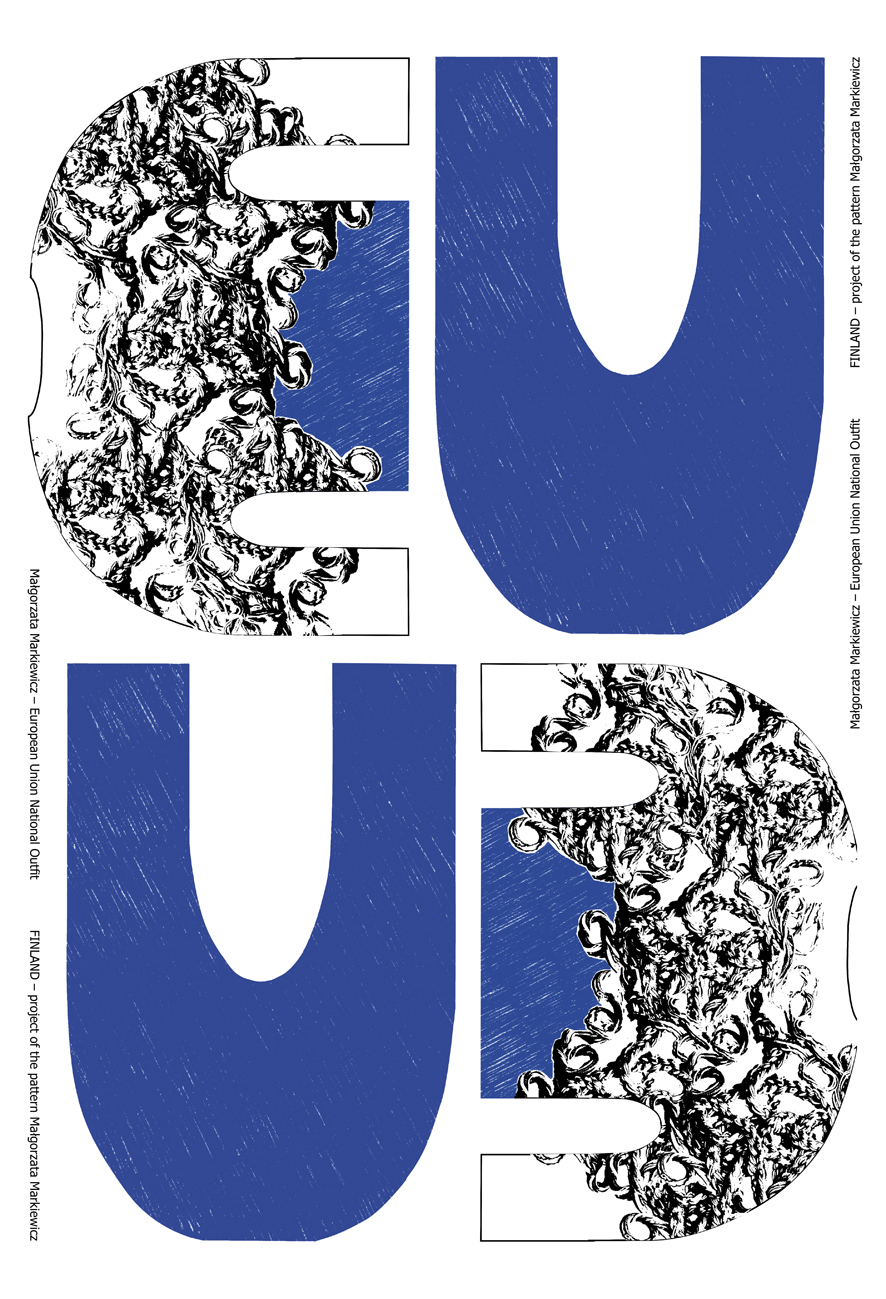
The top and trousers: the dominant blue colour refers to the abundance of lakes in Finland as well as Finland’s marine location. The simple black-and-white stitch motif brings to mind a winter landscape and a sparsely populated country.
ITALY
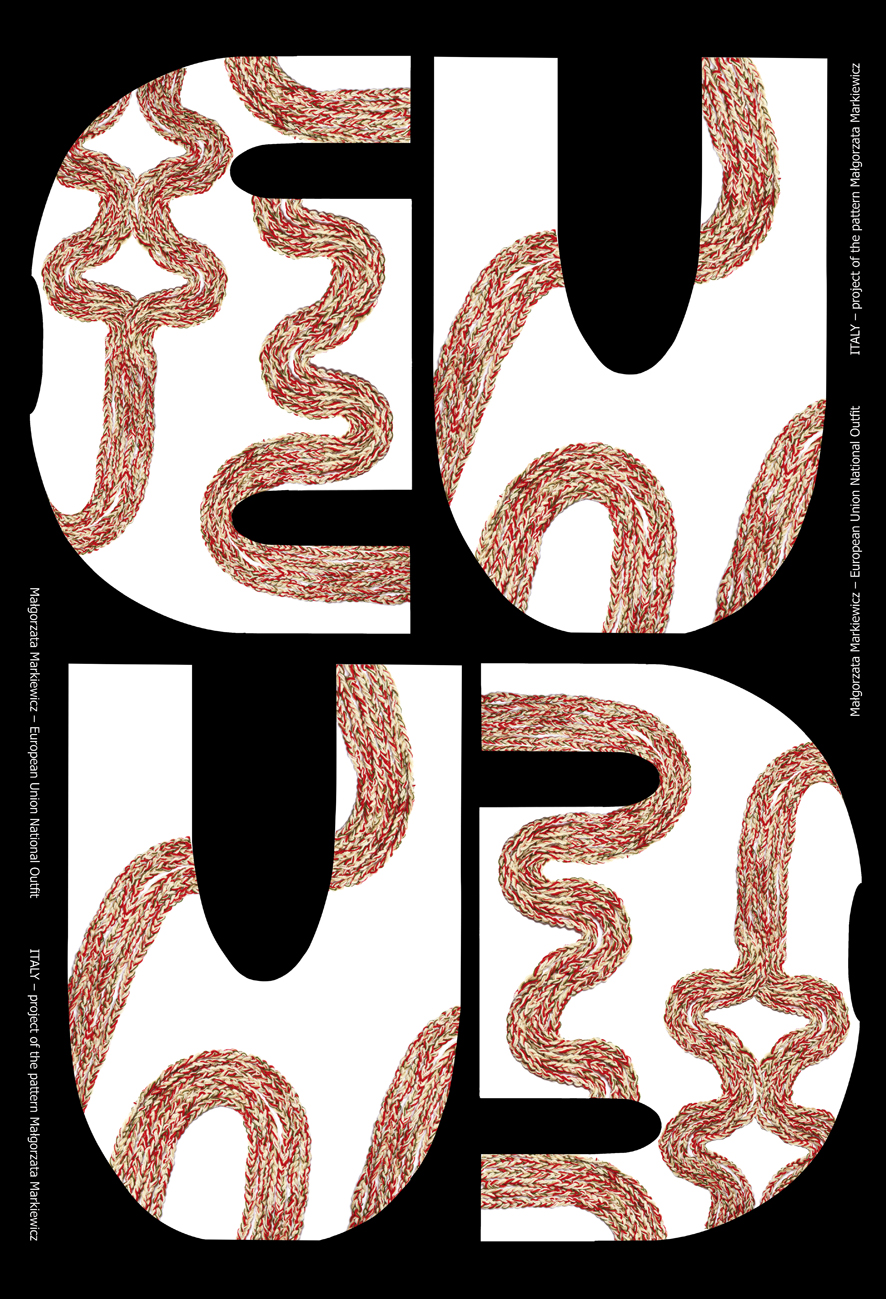
The top and trousers: the colours used – green, red and white – combine the colours of the Italian national flag with the colours of pesto and tomato sauce. The grooves between the ribbons of macaroni evoke the grooves on the columns of ancient Roman buildings.
GREAT BRITAN
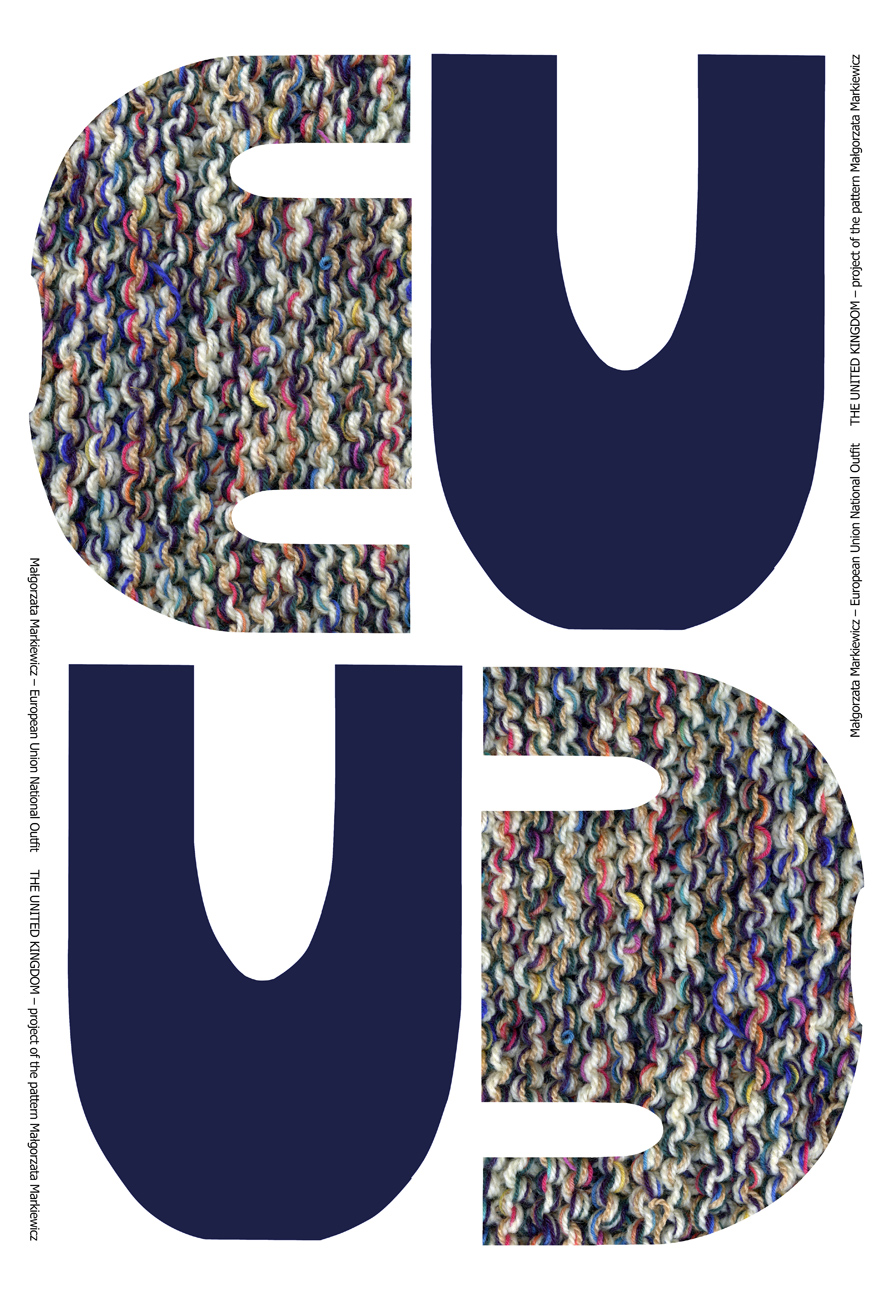
The top: the motif of an English style knitting pattern, made with multicoloured yarn – a metaphor of the country’s multicultural character.
The trousers: intensely deep blue, they are a reference to the wartime uniforms of British naval officers.
DENMARK
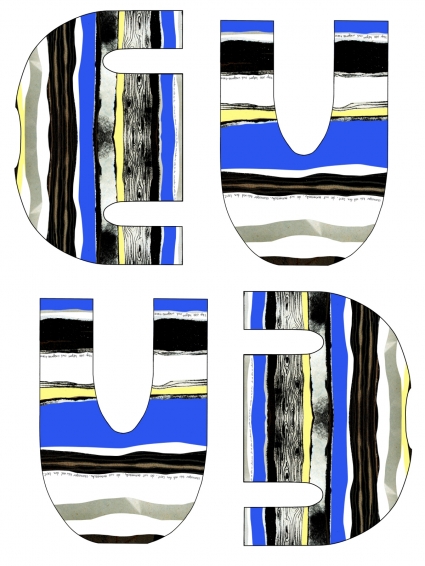
The top and trousers: the main motif consists of stripes and lines. They allude to the land formation of the country:low-lying and surrounded by the sea. Denmark is a welfare state which, in return demands that its citizens stick to the ‘straight and narrow’. The Danish don’t like to ‘stick their head out’. That’s why the slogan ‘Don’t stick your head out’ appears, in Danish, in the form of quotations from songs.
POLAND
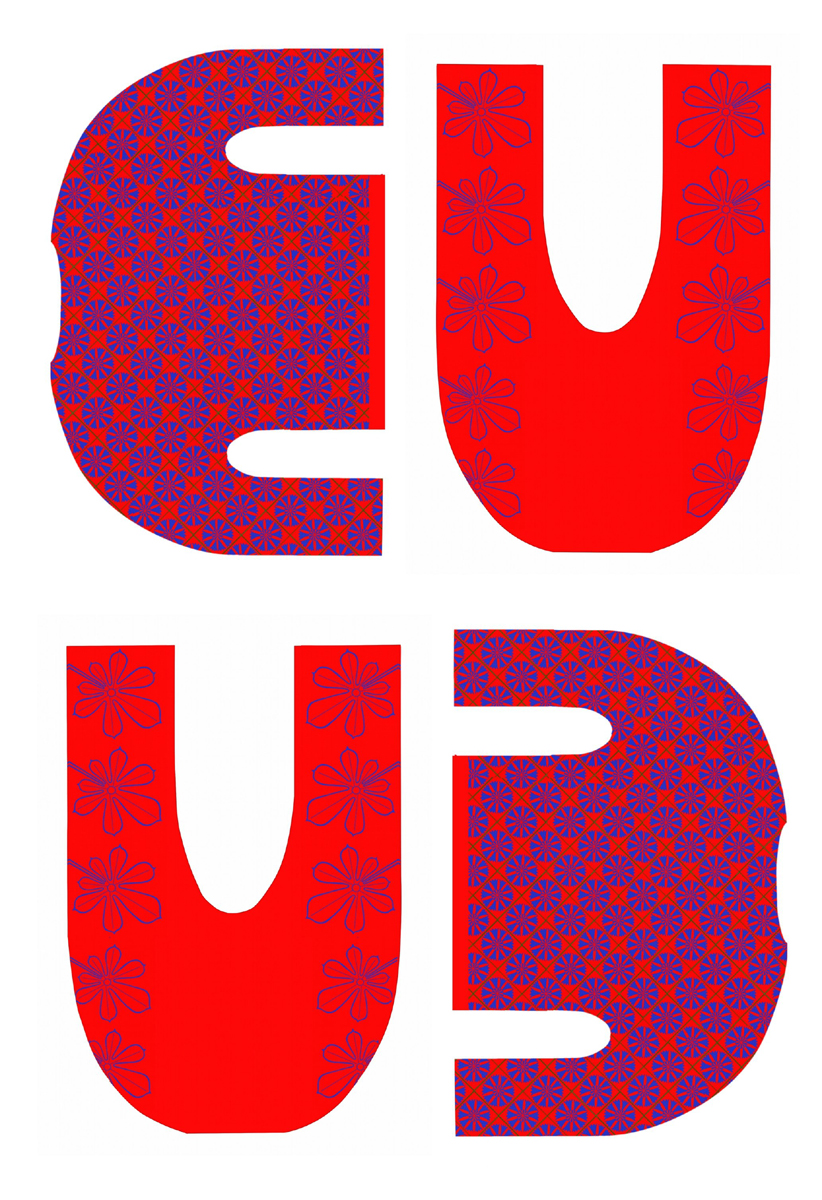
The top: a simplified drawing of a cornflower, a common Polish decorative folk motif.
The trousers: a drawing of a chestnut leaf; a motif which evokes the drawings of Stanisław Wyspiański, suggestive of a Polish hankering after an old-fashioned aesthetic.