Polski
The Cookbook with Home Metaphors
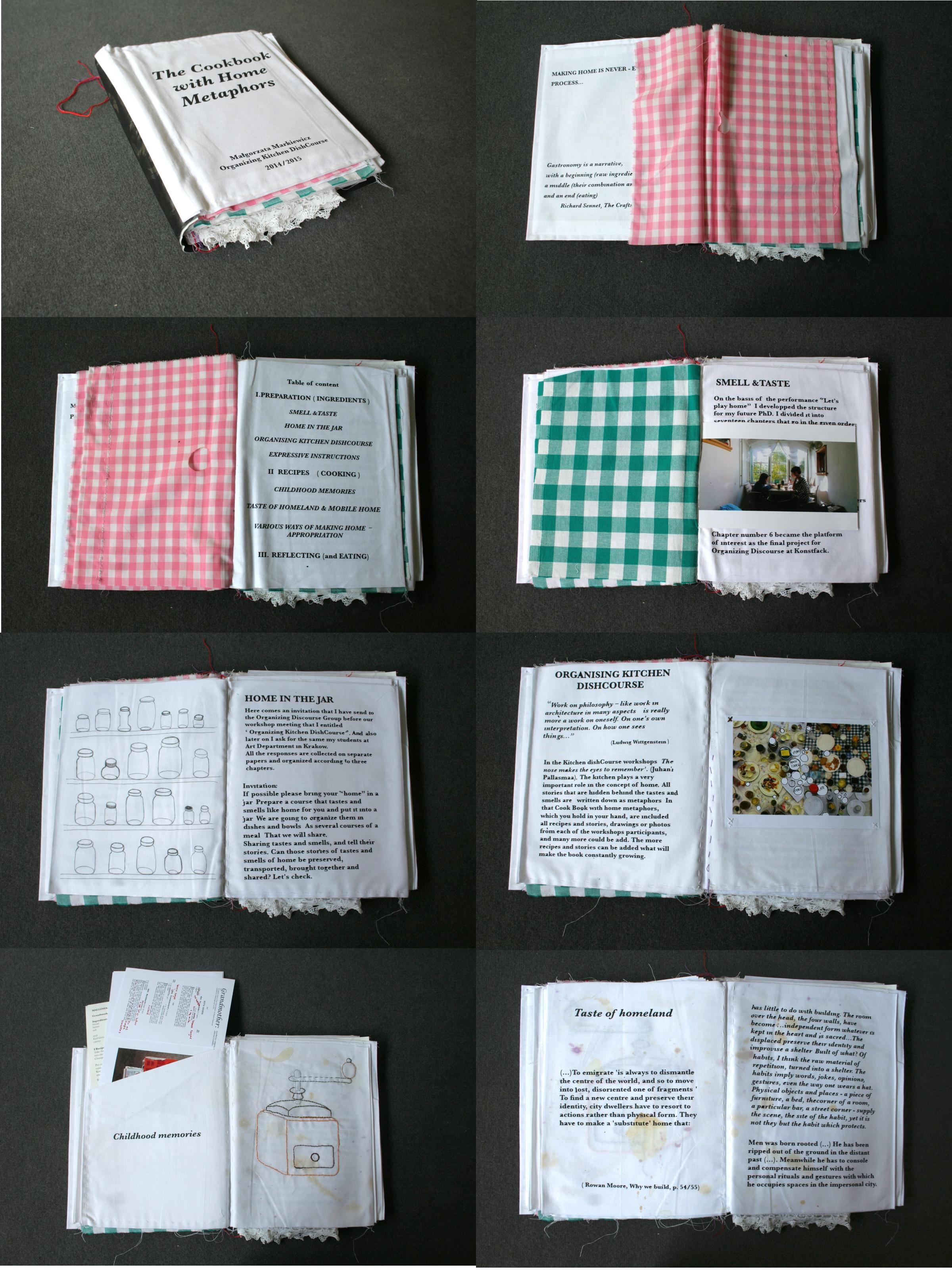
I wrote The Cookbook with Home Metaphors in English, since it was the final task after a one year post-graduate course “Organising Discourse” at Konstfack in Sztokholm. Its structure is divided into three parts: the beginning or raw ingredients, middle or recipes/stories and the last one – end – consumption/eating as a conclusion. This tripartite division was inspired by the earlier mentioned theory of Richard Sennet, regarding gastronomy as a narrative. According to him, one cannot fully experience dishes if one does not know the ingredients first and has no experience of the process of combination (cooking), only then eating – consumption makes sense. Individual raw ingredients do not exist without each other, they all just make up a story.
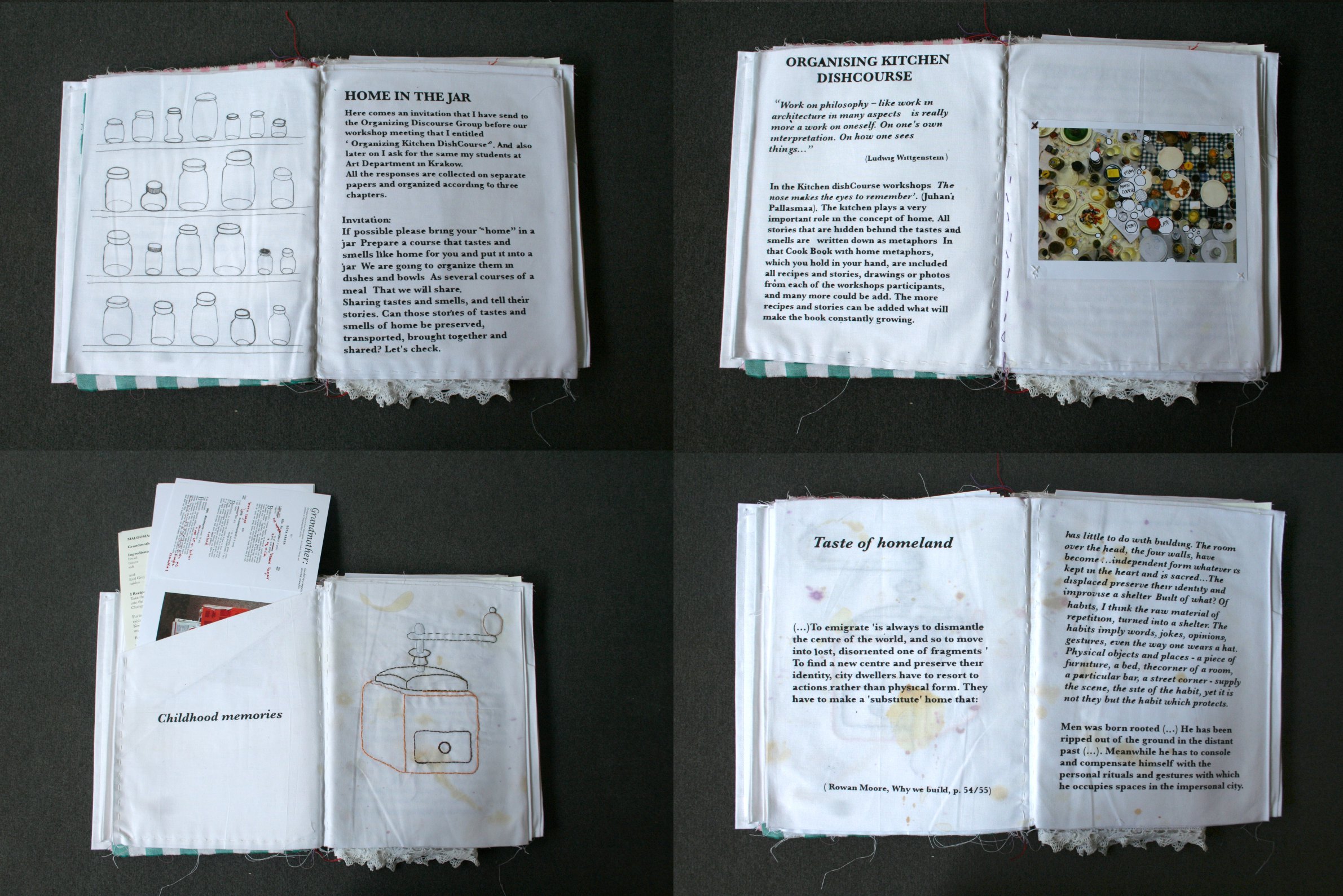
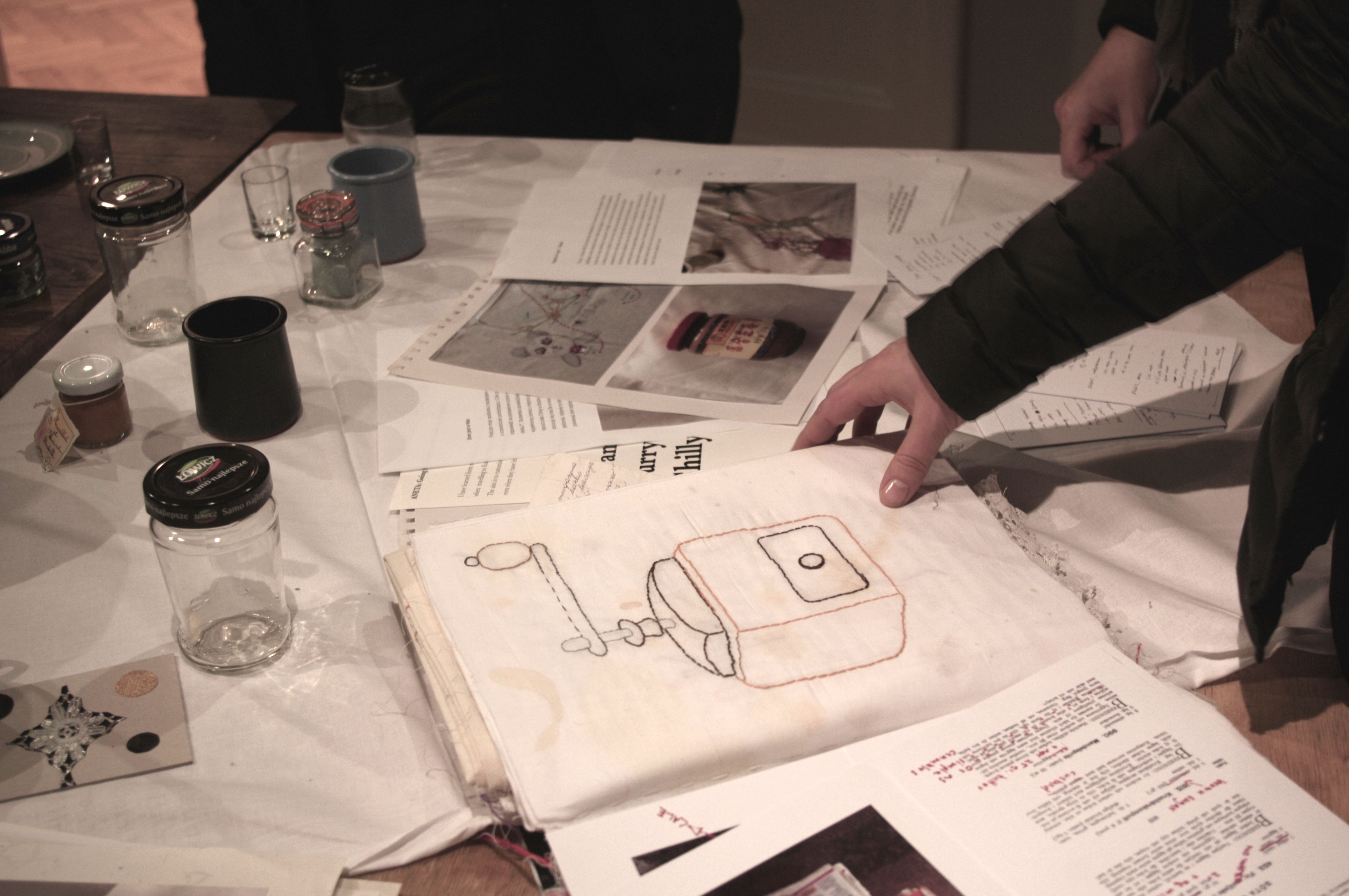
As part of the course, I conducted workshops with other participants, I called them “Organising Kitchen DishCourse”. The title is a play of the words in the name of the course itself and the kitchen and taste aspects of my search. During our meeting, we shared food and stories associated with it, then I collected students’ subjective recipes for home and I used them later in the book.
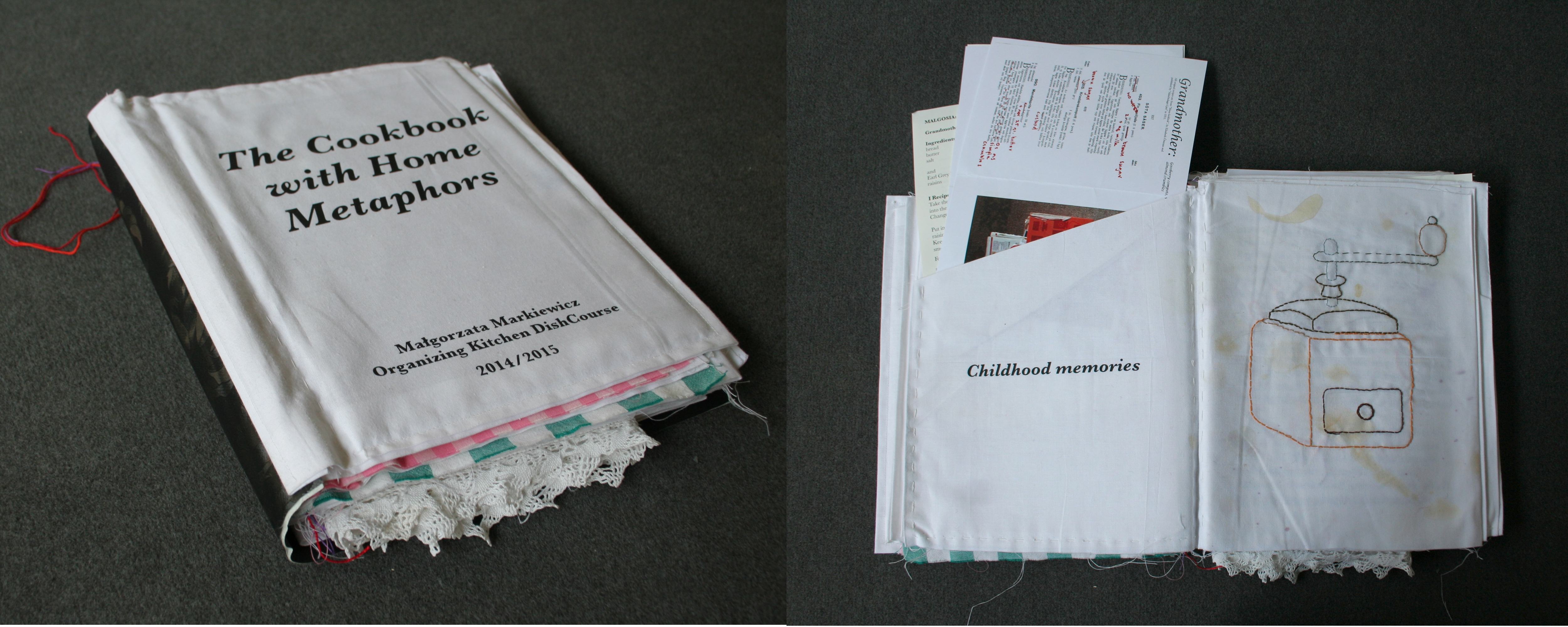
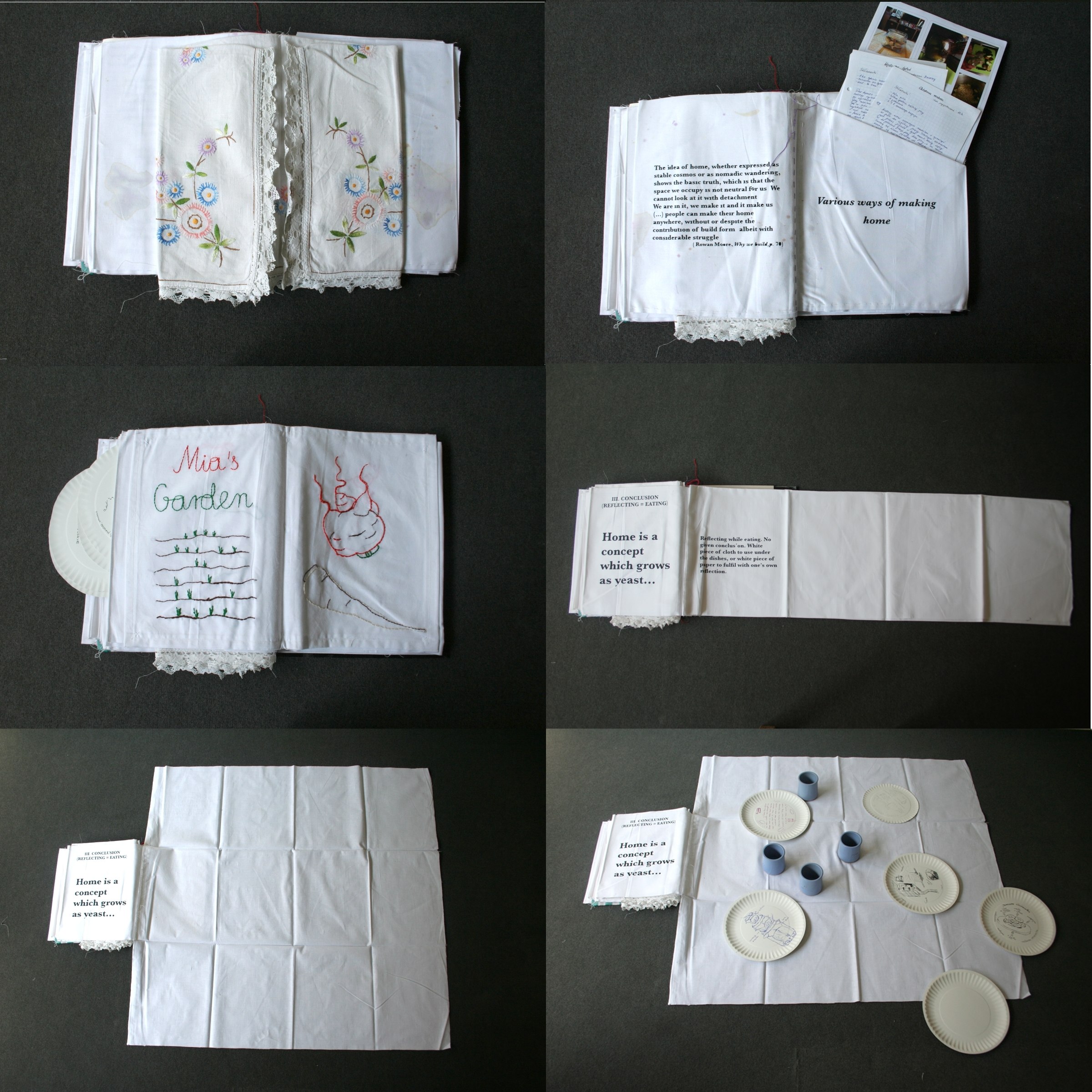
The result of these considerations is the indefinitely developed cookbook. It has the shape of a typical set of different recipes collected in the messy form that everyone probably knows from their family experience. The recipes have been collected for years, handwritten on loose sheets of paper or cut out of newspapers, the pages are stained and greasy, with jagged edges, and sometimes even already yellowed. The initial desire to introduce order in this motley disorder disappeared in the chaos that prevailed among the gathered recipes and stories.
At the end of The Cookbook with Home Metaphors, in the chapter “consumption”, there is a white tablecloth folded to the size of a book, inviting to consume what has been “cooked” in the earlier parts. There is also a conclusion stating that everyone chooses – “consumes” from my book something else and they shall devour it otherwise. The tablecloth inviting for further action constitutes an open end.
The book itself is a textile, sewn and embroidered object made of a tablecloth, having lots of pockets and nooks and crannies in which one can hide and store the collected recipes. The fact that the tablecloth was previously used during meetings is not insignificant. Stained with traces of the material, which is a “record” of the course, it becomes a witness to what happened.
I tried to connect what was individual with what was general both in my PhD dissertation and the cookbook itself. I tried to relate my little observations to a larger theory, find staples that span them. I wanted to get confirmation that bending over what is fragile and inconspicuous, one can consider great and mighty things of importance to the public.